

Blog
How to Approve Candle Jar Samples Before Bulk Production

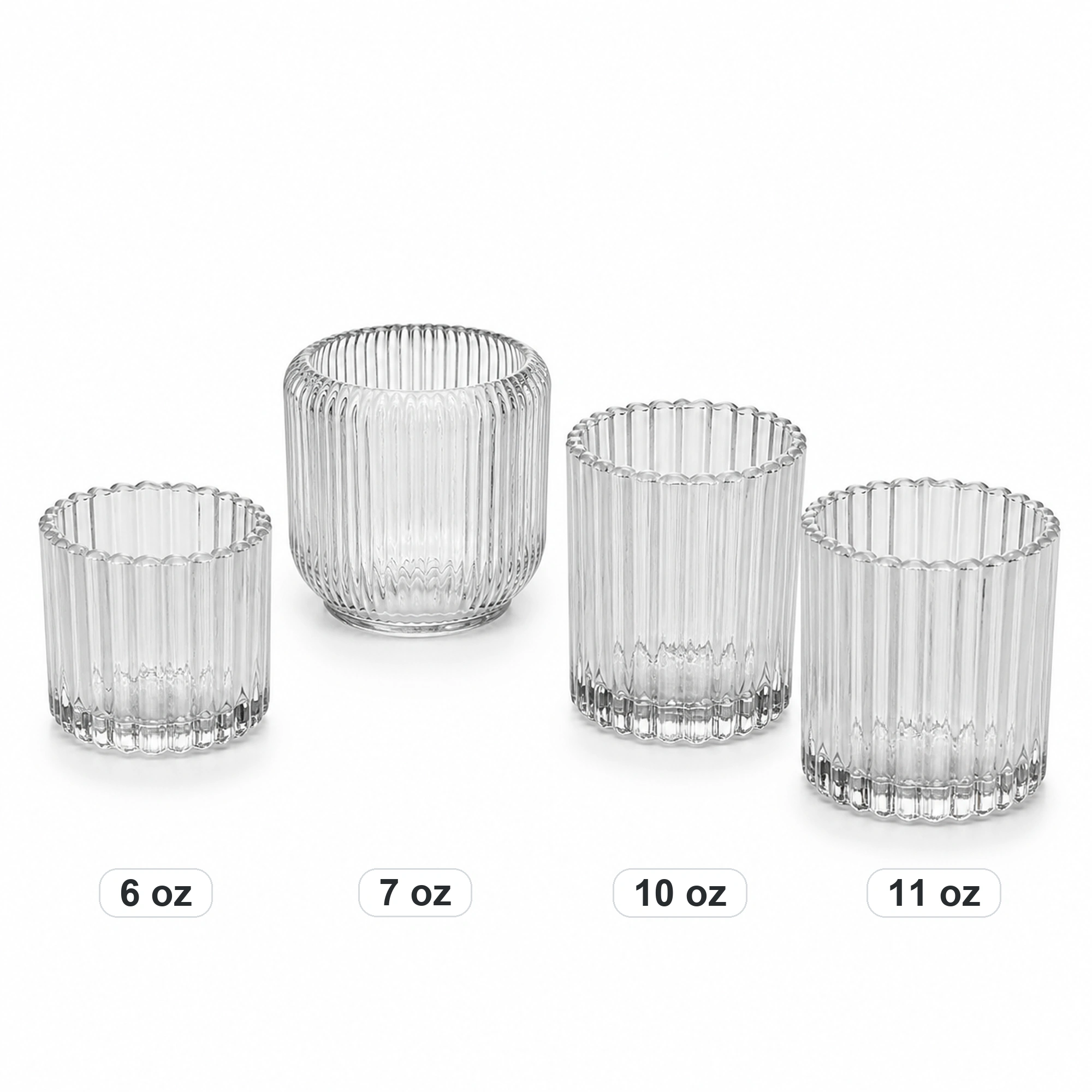
A candle jar can look right in a photograph and still leave important questions unanswered: Will the lid fit consistently? Is there enough space for the intended fill? Will the label sit neatly on the chosen surface?
Before approving bulk production, separate three decisions: the empty container specification, the decorative finish, and the performance of the finished candle. A sample approval record should identify what has been checked, what remains open, and which exact version the supplier should reproduce.
1. Confirm the jar geometry, not just the stated size
Start with the product drawing and physical samples. Record overall height, opening diameter, maximum outside diameter or width, and the dimensions relevant to your filling and packing process. Agree on measurement points and acceptable tolerances with the supplier rather than assuming all dimensions are exact.
For example, our ribbed glass candle jar collection includes four distinct formats listed as 6 oz, 7 oz, 10 oz and 11 oz. They should be evaluated individually, not treated as one identical shape scaled up or down.
Check the base, rim and visible glass surfaces against agreed inspection criteria. Appearance alone does not establish suitability for candle use, and a thick-looking base is not proof of thermal performance.
2. Separate nominal size from the approved wax fill
A size in a product name is not automatically the net weight of wax that your finished candle should contain. Confirm whether the supplier’s stated capacity refers to a nominal size, a measured liquid volume or another convention.
Use your actual formulation and filling process to establish the target wax weight, fill line and headspace. Record those separately from the empty jar’s dimensions and capacity. Do not use a generic conversion from fluid volume to wax weight as the final production specification.
Our colored frosted glass candle jar is listed with a nominal 12 oz candle size. Buyers should still confirm their intended working fill through sampling before finalizing packaging artwork or net-content information.
3. Approve the jar and lid as a matched set
Evaluate the actual lid proposed for production, including any liner or sealing component. Check seating, removal, visible gaps and whether the fit is appropriate for the intended presentation and handling. If several samples are available, compare more than one jar-and-lid pairing.
The 770 ml boat-shaped glass candle jar, for example, is presented with a bamboo lid. Its non-round format makes the complete silhouette and lid alignment particularly useful approval points.
Do not describe a lid as airtight, leakproof or suitable for extinguishing a candle unless that specific claim has been substantiated. A decorative lid and a validated functional closure are not interchangeable concepts.
4. Sign off decoration with a physical reference
Review the finish under consistent lighting and compare the production proposal with an agreed physical reference. Confirm which surfaces are coated, the intended color and opacity, logo position, print size and any areas that must remain undecorated.
- For labels: confirm the usable panel, artwork size, placement and adhesion on the actual finished surface.
- For direct printing: approve artwork orientation, alignment and legibility on the real jar.
- For textured or curved jars: verify that the proposed decoration works with the geometry rather than relying on a flat mockup.
Record acceptable variation and the checks required for handling, packing and intended use. Keep the approved sample identifiable; a photograph alone may not capture finish or color differences adequately.
5. Keep packaging approval separate from candle validation
The National Candle Association advises using glass designed for candle use, rather than assuming ordinary glassware is suitable. Ask the supplier for relevant container specifications and supporting documentation, and have your candle manufacturer or qualified testing partner assess the requirements for your product and destination market.
Validate the finished candle with the actual jar, wax, fragrance, wick configuration and decoration. An attractive empty sample does not establish finished-candle safety, burn performance or compliance. The NCA also explains candle safety labeling, including ASTM F2058; review applicable labeling requirements before releasing artwork.
Retain a dated approval record identifying the sample version, agreed specification, outstanding tests and authorized changes. If a material, finish or component changes later, decide what needs to be rechecked before accepting it.
Frequently asked questions
Can I approve a candle jar from photos alone?
Photos can help shortlist designs, but they cannot confirm physical fit, working fill or finished-candle performance. Use physical samples for those decisions.
Does approving a sample mean the candle is certified?
No. Sample approval records your agreed packaging specification. Certification or compliance claims require appropriate evidence for the relevant product and requirements.
Planning your next candle collection? Explore the jar formats linked above and send the selected product reference, target fill, lid preference, decoration artwork and order quantity through our sample and custom quote request form. Ask which samples and specifications are available so your team can complete approval before committing to bulk production.